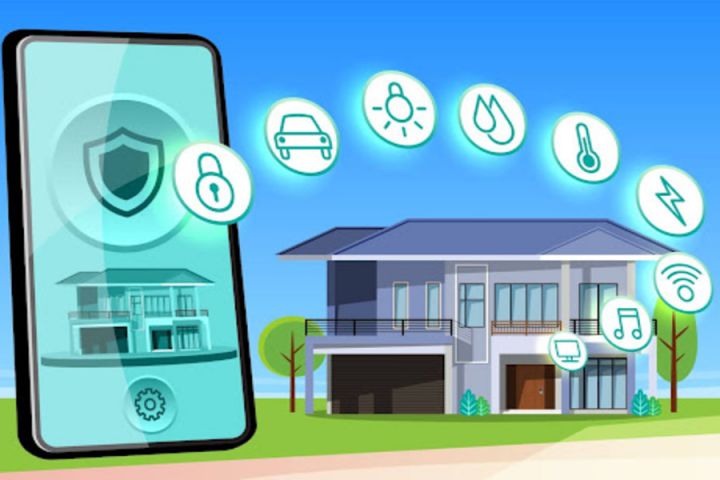
by acceron_dev_user | Aug 5, 2024 | IoT network security
Technological advancements have undoubtedly changed our lifestyle. Who knew we would have wearable fitness trackers, smart homes, smart home appliances, etc.? The digital era has increasingly intertwined with the numerous IoT devices. IoT is nothing but the Internet of Things. IoT devices are revolutionizing how we live and work, and they have made our lives much better and easier.
However, these advancements have also brought a lot of risk with them. Security of these interconnected devices is necessary to ensure complete protection from data leaks or breaches. Let’s just jump into this blog to know what is IoT network security in detail and why it is required.
Understanding IoT Security
IoT security is nothing but the process and protocols to protect IoT devices and networks from numerous cyber attacks. IoT devices are interconnected which invites hackers or cyber criminials to have the access of sensitive information exist in all the devices. Thus it is important to have IoT network security for ensuring a safe access and data protection.
These devices, often small and limited in processing power, can be vulnerable to hacking, data breaches, and other malicious activities. Ensuring their security means implementing strategies that prevent unauthorized access, ensure data integrity, and maintain user privacy.
Importance of IoT Security
1. Protection of Personal Data:
All IoT devices usually have an interconnection. These devices often collect and transfer crucial and sensitive information that could be confidential. High-class security is required to protect these data from hackers. If these devices are compromised, hackers can access this data, leading to privacy breaches and identity theft. To add an extra layer of protection, one can segment their network. This helps limit the spread of an attack.
2. Safety and Security:
In critical applications like healthcare, transportation, and industrial control systems, the integrity of IoT devices can directly impact safety. For example, a hacked medical device could deliver incorrect medication dosages and incorrect reports that could further lead to bigger health issues in the future, or a hacked smart car system could cause accidents.
3. Preventing Financial Loss:
Data breaches or cyberattacks can result in great financial losses be it for individuals or businesses. The hackers can encrypt data and get all the access of the sensitive information which is required to be kept confidential within the IoT devices of the organization or individuals. Ensuring IoT security helps prevent such scenarios, saving money and resources. Regularly monitoring and logging device activity can help detect any unusual patterns or activities that may indicate a data breach.
4. Maintaining Trust:
For IoT technology, users must trust that their devices are secure. Any breach can disrupt this trust, leading to decreased adoption and potentially stalling technological progress. Trust maintenance is very crucial to carry on successful operations in the organization. IoT network security helps to maintain this trust by preventing many common security issues that a company or individual can face.
Requirements of IoT Security
1. Strong Authentication:
IoT security is very important, especially in this digital world where hackers remain in disarray and pose immense cyber threats to you. IoT devices should use strong authentication methods to guarantee that only authorized users and devices can access the network and no one else. Unique passwords, biometric verification, and multi-factor authentication can be included in this robust authentication method.
2. Data Encryption:
Data Encryption is also highly required, and IoT network security allows data encryption both at rest and in the transfer of data, even if it is intercepted by someone. The hacker, if tries to compromise the data, will not be able to access the information as the encrypted data cannot be read without the appropriate decryption key. This is very useful and important for safeguarding sensitive information.
3. Regular Software Updates:
Manufacturers must provide regular software updates to address newly discovered vulnerabilities. Users should also update their devices on a regular basis to keep it safe from potential cyber-attacks. It is advisable to set your IoT devices to automatically receive updates. This will help keep them protected against the latest threats.
4. Secure Boot and Firmware Integrity:
Devices should verify the integrity of their firmware before booting up, ensuring that no unauthorized code is running. Secure boot mechanisms help maintain the integrity of the device from the moment it powers on.
5. Network Security:
Implementing network security measures like firewalls, intrusion detection systems, and secure communication protocols can prevent unauthorized access and attacks on IoT networks. This helps to safeguard networks that are required to prevent data leaks.
6. Physical Security:
Physical security measures should not be overlooked. Preventing unauthorized physical access to IoT devices can protect them from being hacked and other forms of direct attacks.
Conclusion
IoT network security is not just about protecting devices; it’s about safeguarding our personal data, ensuring our safety, and maintaining trust in the technology. By understanding the importance and requirements of IoT security, one must take proactive steps to protect all their IoT devices from potential cyberattacks.
Incorporating these security practices will help you build a strong IoT ecosystem that is completely safe from threats. This can be done easily with a valuable IT security distributor like Acceron Infosol Pvt Ltd, which has extensive expertise in deploying and distributing security technology to its clients.

by acceron_dev_user | Aug 5, 2024 | IT security solution
Security threats are prevalent in the current society, especially for businesses, and therefore, companies must protect themselves from such threats. Picking the ideal cyber security service providers in India when so many are available may be challenging. To help you make an informed decision, here are some key factors to consider when selecting the best cyber security service providers in India for your needs.
1. Understand Your Cybersecurity Needs
The process should be started by evaluating your unique needs in the sphere of cybersecurity. Knowing the type of data, it is easier to identify the threats, and ascertain the level of security necessary for the business. knowledge will assist you in your efforts to employ outcome-oriented providers whose solutions match your requirements.
2. Research Providers’ Expertise and Experience
Notably, it is necessary to mention that inexperience, especially cybersecurity issues, could quickly escalate to a severe issue. First of all, it is better to select providers that have had significant experience in the sphere and have already gained popularity. Controls & Discover, risk management, and some big companies specialising in cybersecurity include Tata Consultancy Services, Wipro, Acceron, and Infosys. Check credentials, certifications, and the staff’s qualifications for providing security services.
3. Evaluate the Range of Services Offered
Cyber security is a knowledge area that is concerned with identifying and preferably reporting risks as well as protecting information and readiness in the event of a breach. Thus, one should prefer the provider that can offer all these services to guarantee proper implementation. Currently, firms like HCL Technologies, Acceron and Quick Heal Technologies design comprehensive solutions that can satisfy all your company’s needs.
4. Assess Customization and Scalability
Companies are different and have their specific security needs. Choose an organisation that will have the ability to work on solutions that will suit your business requirements. Also, the possibility of order scale should be checked. The price chart contains information about possible additional fees for large-scale orders. A good security provider should be able to accommodate your growing company and make changes to its services as needed.
5. Examine Technology and Tools
Internet security providers mean different things to different people, but the core of it is the technologies that are being used. Make sure that the provider is using top-notch and modern means of protection. India’s major IT security solution vendors that rule the roost for their advanced tools and technologies include the likes of Palo Alto Networks India, Acceron and McAfee India.
6. Consider Customer Support and Response Time
Fast and efficient assistance is relevant in the case of a cyberattack. Assess the provider’s customer support services and their timeliness. An organisation’s provider must, therefore, have the capability of providing around-the-clock support and responding to cyber threats immediately.
7. Review Client Testimonials and Case Studies
Client feedback and success stories provide relevant information regarding the quality of the provider’s work and dependability. Search the reviews given by businesses similar to yours and see how the provider is solving the cybersecurity issues of those businesses. In other cases, positive testimonials from the patients served, as well as other successful cases, may also be compelling evidence of the provider’s competence.
8. Compare Costs and Value
Obviously, cost should not be your only criteria, but the choice should take into consideration the amount that you are willing to spend. Check the costs of other cyber security service providers in India and compare the value of their services. Some providers provide fixed-rate and pre-decided and few design the plan according to your usage and requirement. Make sure that you select a provider that offers moderate prices but which includes almost all the security services that you may require.
Conclusion
Selecting the best cyber security service providers in India is a crucial decision that defines the security of business organisations. Consequently, you can ensure you comprehend your requirements and make a rational choice by assessing providers’ experience, services, and such aspects as customisation, technology, and support. Solutions can be provided by some reputable cyber security service providers in India, such as Tata Consultancy Services, Wipro, Acceron, Infosys, HCL Technologies, and others, meaning that your business can receive reliable cybersecurity solutions developed exclusively for it.
by acceron_dev_user | Jul 25, 2024 | IoT technology
The modern world has seen many technological improvements, and IoT is one of them. IoT stands for ‘Internet of Things,’ which allows the transfer of data through the Internet. IoT devices in enterprises enhance operations, enable efficiency, and upgrade data collection. As IoT devices are internet-connected objects, they pose a great risk of security attacks.
Data shared through IoT devices often requires high-security features to ensure complete confidentiality and safety. Considering security as the primary concern, this blog includes essential tips you can follow for securing IoT devices in an enterprise environment.
Tips to Secure IoT Devices In Enterprise
Conduct a Comprehensive Risk Assessment:
It is always advised to conduct a comprehensive risk assessment before integrating IoT devices into your enterprise. Understanding the functions, operations, and potential risks of IoT devices is essential to ensure high-quality work and enhanced data protection. Assess the devices’ default security settings, potential vulnerabilities, and the impact of a security breach. This assessment should be a continuous process as new devices and vulnerabilities emerge on a regular basis.
Implement Strong Authentication Mechanisms:
Securing IoT devices to ensure risk-free operations in an enterprise holds immense importance. Just as you keep a strong password for your emails and social media accounts, you must enforce a robust and unique password for each of your IoT devices that will help you keep all your sensitive data safe from malicious hackers and digital thieves. Weak or default passwords are a common con of IoT devices. Implementing strong authentication mechanisms like Multi-factor Authentication (MFA) is recommended to add an extra layer of security.
Segment IoT devices on the network:
Once strong authentication is implemented, IoT devices must be segmented on the network. To reduce the impact of IoT devices on the rest of the network, create a separate network segment or VLANs (Virtual Local Area Networks). Strict access controls must also be put into practice to prevent any kind of unauthorized access outside the enterprise.
Keep Software Up-to-date:
Be it any IoT device, update is required for the facilitation of workplace automation. Up-to-date software helps eradicate potential security attack risks. Establish a strong process for regularly updating the firmware and software of all IoT devices. The updates must also be tested before deployment to ensure there aren’t any compatibility issues later on in the network resources. An update mechanism can be developed in an enterprise to ensure all the IoT devices remain up to date.
Implement Encryption:
This is also one of the important procedures to secure IoT devices from unauthorized access and any kind of manipulation. Encryption is implemented both in transit and at rest to protect data from wrongful conduct, such as stealing or illegitimate use. Make use of strong encryption protocols such as TLS (Transport Layer Security) for data sharing over the same network. Ensure that IoT devices support encryption and configure them accordingly.
Establish a Device Management Policy:
Establish a device management policy to ensure access controls are only allowed for authorized devices on the network. Record and maintain an inventory of all the IoT devices, such as manufacturing details, model, firmware version, software, and location. This helps to keep the workflow and identify potential security incidents. The device management policy also helps to manage updates and outlines tasks such as procurement, deployment and maintenance.
Secure Communication Channels:
Make sure that communication between IoT devices and enterprise systems is secure. Use secure communication protocols and avoid unencrypted and unprotected connections. Consider a private IoT network or using a Virtual Private Network (VPN), which helps secure communication channels and doesn’t impact the rest of the network. Regularly review and update communication policies to go along with the upgraded and enhanced security standards.
Educate and Train Employees:
It is important to educate and train employees on the workings and operations of IoT devices so that there is less risk of security attacks. Human errors do result in security breaches, and thus, proper awareness must be raised among the enterprise’s employees about the importance of authorized access controls.
Conclusion
Securing IoT devices is considered to be of great importance due to the security risk they pose. By following the above-mentioned tips, enterprises can lower their risk of security breaches.
As IoT technology continues to evolve, maintaining a strong security posture will be crucial for protecting sensitive data and ensuring the continuity of business operations. If you’re concerned about the security of your IoT devices, then you must contact Acceron, a top network security company in india that can provide complete safety to your organization’s information, data and networks from cyber threats.


